Canaries In a Coal Mine

The Ox and the Canary: Unlikely Heroes of the First World War

🐂🐤

One was a giant of muscle and mud, hauling guns through terrain no machine could cross. The other was small enough to sit in your palm, carried underground to save soldiers from gas no one could see. Neither animal chose to be there.

Two Very Different War Workers

Both animals were pulled into a war they had no say in. Here's a quick introduction before we dig into their stories.

Serbian women leading oxen-drawn carts with wounded soldiers during the retreat to the Adriatic coast, December 1915

Oxen

Slow, powerful, and unstoppable in mud where horses gave up — oxen hauled supply wagons and heavy guns for the British, French, Russian and Austro-Hungarian armies.

Read the full story →
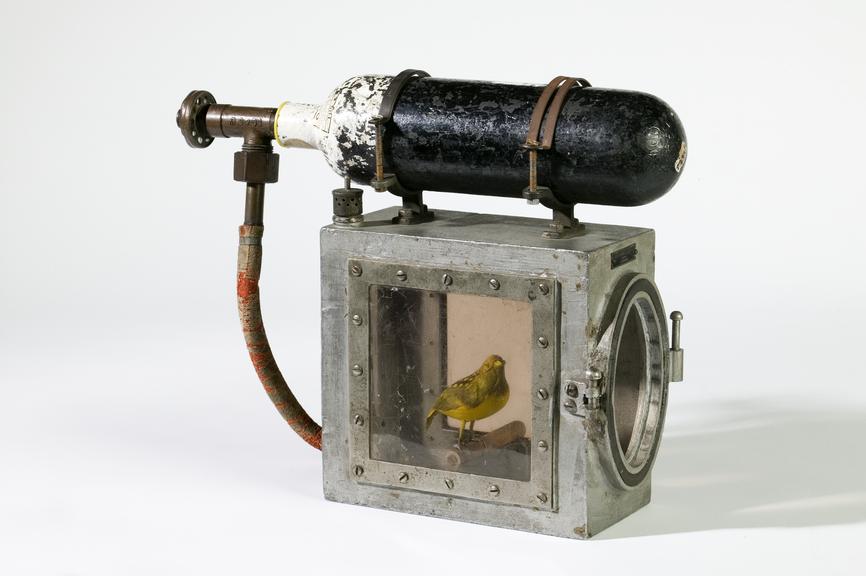
A canary revival cage with oxygen cylinder, used by mine rescue teams to detect and treat gas poisoning

Canaries

Small enough to carry in one hand, sensitive enough to detect deadly gas before any human could — canaries rode into tunnels and bunkers as living early-warning systems.

Read the full story →

Oxen: The War's Slowest, Strongest Workers

How were they used?

Oxen were used by several armies, including the British, French, Russian and Austro-Hungarian forces, to pull heavy wagons of supplies. While horses and mules did most of the war's hauling work, oxen were brought in specifically for the terrain those animals struggled with: thick mud, steep or rocky ground, and routes far from any road.

Why oxen instead of horses?

Oxen were far slower than horses and ate much more food, so armies didn't rely on them for everything. But their raw strength meant they could still drag heavy wagons and artillery through conditions that brought faster animals to a halt.

Conditions they faced

Life for a military ox was hard labour in a war zone: long days pulling enormous loads, exposure to shellfire and disease near the front line, and exhausting treks across broken ground. Thousands of horses, mules, donkeys and oxen were killed, wounded, or worn down by fatigue and disease during the war. Britain's Army Veterinary Corps treated sick and injured animals where it could, but a large number could not be saved.

Were they exploited?

There's a strong case for yes: oxen were made to labour for long hours in dangerous conditions, with no choice in the matter and no understanding of why. They were valued for what they could pull, not cared for simply for their own sake.

At the same time, armies did spend real effort keeping draught animals alive and working — veterinary hospitals existed, and a healthy ox was worth protecting. Whether that counts as "care" or just careful use of a valuable resource is worth deciding for yourself.

Interesting facts

  • Oxen have been used as military draught animals since long before horses were bred for it — armies have leaned on their raw pulling power for thousands of years.
  • An estimated 16 million animals of all kinds served in the First World War, from horses and mules to dogs, pigeons — and oxen.
  • Oxen were sometimes the only option in places motor vehicles couldn't reach: swamps, mountains, and roads destroyed by shelling.
Serbian women leading oxen-drawn carts with wounded soldiers, December 1915
Serbian women leading oxen-drawn carts carrying wounded soldiers during the retreat to the Adriatic coast, December 1915. Image: IWM (Q 52300), used under the IWM Non-Commercial Licence.

Canaries: Tiny Bodyguards Underground

How were they used?

Canaries were used by the British military and others to detect poisonous gas in tunnels and bunkers. Carried in cages by specialist "tunnelling companies," they warned soldiers of toxic air — especially deadly carbon monoxide left behind after underground explosions — long before a human could sense any danger.

How did a bird "warn" anyone?

Canaries have a much faster metabolism than humans, so gas affects them first and visibly. If a bird became sick, stopped singing, or fell off its perch, that was the signal: get out, now. Mine rescue stations even kept birds' claws trimmed so they couldn't grip too tightly — making it obvious the moment a canary lost its balance.

An idea born from a mining disaster

The method wasn't invented for the war. It came from scientist John Haldane, who investigated a coal mine explosion at Tylorstown in Wales in 1896 and proposed using small, sensitive animals as living gas detectors. By the First World War, specialist rescue teams — sometimes called "Proto men" after their breathing apparatus — carried around six canaries and mobile cages into the tunnels dug beneath enemy lines.

Were they exploited?

Here the tension is sharp: canaries were placed in some of the most dangerous environments of the war and could be killed by the very gas they were warning soldiers about. Their entire "job" depended on them getting sick before a person did.

Rescue teams did try to save them — special cages with oxygen cylinders could revive a canary after it collapsed, and a bird could be used again once recovered. Even so, they were kept specifically so they would suffer first. Whether their life-saving role justifies that is a fair question to sit with.

Interesting facts

  • Newspapers back home told the story of a canary named Dick, who was repeatedly carried out of tunnels limp and barely alive — his survival became a small symbol of wartime resilience.
  • The phrase "canary in a coal mine," still used today for any early warning sign, comes directly from this practice.
  • Mice were sometimes used alongside canaries, but canaries were preferred — a bird losing its grip on a perch was a far more obvious signal than a mouse simply looking unwell.
A cage with an oxygen cylinder used to revive canaries after carbon monoxide exposure
A cage for reviving canaries, complete with an oxygen cylinder, made by Siebe Gorman & Co — the same type of mine-rescue equipment used by WW1 tunnelling companies. Image: Science Museum Group Collection, CC BY-NC-SA 4.0.
David Bomberg's sketch of Canadian tunnelling company sappers at work underground
Sappers of a Canadian Tunnelling Company at work underground, sketched by war artist David Bomberg — this is the kind of confined, dangerous space canaries were carried into. Image: IWM (Art.IWM ART 2708), used under the IWM Non-Commercial Licence.

Oxen vs. Canaries

Click a button to spotlight one animal, or view both together. Same war, two completely different experiences.

Category
🐂 Oxen
🐤 Canaries
Size
Huge — often over 700kg
Tiny — around 20 grams
Main role
Hauling wagons, supplies & heavy guns
Detecting poison gas underground
Environment
Open ground, mud, mountain tracks
Cramped tunnels and bunkers
Danger faced
Shellfire, exhaustion, disease
The very gas they were sent to detect
Legacy
A reminder of how much the war relied on animal muscle before machines took over
Gave us the phrase "canary in a coal mine," still used today

So — Were They Exploited?

"Exploitation" means using someone or something purely for your own benefit, without much regard for what it costs them. Applying that word to animals in wartime is genuinely debatable — here's the case on both sides.

The case for "yes"

Neither animal had any choice. Oxen were worked to exhaustion in dangerous places; canaries were deliberately put in harm's way because their suffering was the whole point of the system. They bore the risk so humans didn't have to.

The case for "it's complicated"

Armies also invested in keeping these animals alive — veterinary hospitals for draught animals, oxygen-cage revivals for canaries. That doesn't erase the danger they were put in, but it shows their treatment wasn't simple neglect either.

Both animals served important roles, but were put in harm's way to support military operations.

WWI Animals Quiz

10 questions — 8 test what you've learned, 2 ask what you think. No wrong answers on the reflective ones!

Question 1 of 10
Factual
0 / 8

Nice work!

Fact of the Day

Click the button for a random fact about oxen and canaries in WW1.

Sources

Every fact on this site is drawn from these sources. Follow the links to dig deeper.